
Cover crop seeds
Cover crop seeds for Philippine plantations Kudzu Seeds Trading supplies Mucuna bracteata (MB), Pueraria javanica (PJ), Calopogonium mucunoides (CM), Centrosema pubescens (CP), and Calopogonium...
5
Products
2002
Founded in Davao City
ISTA + AOSA
Tested Methods
Note on our name: Kudzu Seeds Trading supplies managed tropical cover crop seed. Pueraria javanica, one of our cover crops, is not the invasive kudzu vine (Pueraria montana) regulated in parts of the USA. Our seed is germination- and purity-tested to ISTA and AOSA methods. See the difference.
Showing 5 products
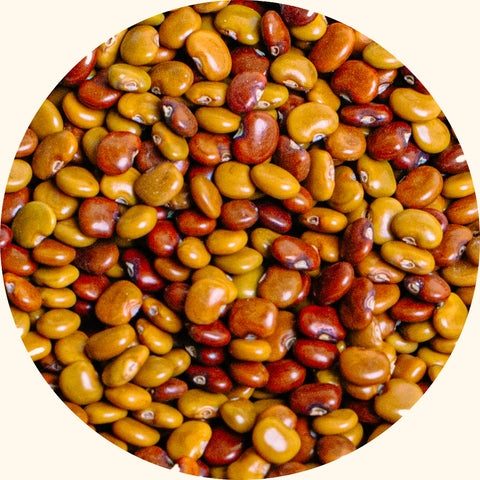
Cover Crop SeedsCalopogonium caeruleum (CC)
Calopogonium caeruleum (CC) is a shade-tolerant tropical legume cover crop for oil palm and rubber, including mature plantings. Tropical Forages reports its productivity as relatively constant at 60 to 100% light transmission, growth on soils with pH as low as 4.0, and 3 to 7 t dry matter per hectare per year in the open (1 to 1.5 t under mature oil palm at 10% light transmission). Kudzu Seeds Trading supplies CC seed, germination- and purity-tested to ISTA and AOSA methods, to buyers across the Philippines and, on request, worldwide from Davao City; export consignments carry a phytosanitary certificate issued by the Bureau of Plant Industry (BPI).
PLANT CHARACTERPerennial, twining legume, stems become woody with age. Rooting in nodes when in contact with moist soil.
Growth: Spreads via stolons under favorable conditions.
USESGreen manure, nitrogen fixation, weed suppression and erosion control under tree crops. Under mature oil palm (10% light transmission) Calopogonium caeruleum produced 1 to 1.5 t DM/ha/year, out-yielding a wide range of common herbaceous legumes, and in mixtures it eventually dominates under heavy shade. In a Nigerian trial it gave the second-highest green-manure effect on maize yield among 12 legumes tested (Tropical Forages, CIAT and ILRI 2020), but no single species-specific annual fixation rate is currently published for it from verified evidence. Often used as part of a multi-species cover crop mixture in oil palm and rubber plantations.
GROWTH HABITTolerates heavy shade. Grows in soils with pH as low as 4.0. More drought tolerant but slower to establish than CM and PJ. May take 20 months to achieve a complete cover (Tropical Forages, CIAT and ILRI 2020).
SEEDING RATEUnder oil palm in Southeast Asia: CC at 1 to 1.5 kg/ha with PJ at 5 to 7.5 kg/ha (Tropical Forages, CIAT and ILRI 2020); or PJ 4 + CP 3 + CC 1 = 8 kg/ha with 5 g Rhizobium per kg of seed (MPOB TT No. 501, 2012). The rate for your site, including any pure-stand sowing, is set on the quotation.
PLANTING METHODDrill or plants in holes
DRY MATTER PRODUCTION3 to 7 t/ha/year in the open; 1 to 1.5 t/ha/year under mature oil palm at 10% light transmission (Tropical Forages, CIAT and ILRI 2020)
NO. OF SEEDS/KG20,000 to 50,000 seeds (Tropical Forages, CIAT and ILRI 2020)
Research-backed performance
Sources named
By the numbers
Each figure below is reported by the source named beneath it and applies to the conditions it describes. They are not performance guarantees for our seed.
3 to 7
t dry matter per hectare per year
In the open; 1 to 1.5 t under mature oil palm (10% light transmission). Leaf fall from uncut stands can reach 7 t DM/ha/year.
Tropical Forages (CIAT and ILRI 2020), Calopogonium caeruleum
2nd of 12
Green-manure effect, Nigerian trial
Second-highest green-manure effect on maize yield among 12 legumes tested in a Nigerian trial. No species-specific annual fixation rate is published from verified evidence.
Tropical Forages (CIAT and ILRI 2020), Calopogonium caeruleum
60 to 100%
Light transmission, stays productive
Productivity relatively constant across this range; tolerant of heavy shade.
Tropical Forages (CIAT and ILRI 2020), Calopogonium caeruleum
pH 4.0
Acid-soil tolerance
Grows on soils with pH as low as 4.0 and persists on rainfall down to 700 mm.
Tropical Forages (CIAT and ILRI 2020), Calopogonium caeruleum
Figures above are as reported by Tropical Forages (CIAT and ILRI 2020) for the conditions described there, not a guaranteed outcome on your site. Legume cover contributes nitrogen; adjust your fertiliser programme only after soil and leaf analysis shows what the cover supplies on your block. View the Calopogonium caeruleum factsheet
SUPPLIERSupplied by Kudzu Seeds Trading, the Philippines-based sister company of Chemiseed Sdn. Bhd. Seed is germination- and purity-tested to ISTA and AOSA methods, and test results are available on request. Export consignments carry a phytosanitary certificate issued by the Bureau of Plant Industry (BPI); import permits and admissibility in the destination country remain the buyer's responsibility.
AVAILABILITYWe supply buyers across the Philippines and, on request, worldwide from Davao City. Request a quotation: minimum order and lead time are confirmed on the quotation.
Related Resources
Buy cover crop seeds in the Philippines
Compare All Five Cover Crop Species
Best Cover Crop for Oil Palm Plantations
Best Cover Crop for Rubber Plantations
Cover Crops 101: A Guide for Tropical Plantations
Frequently Asked Questions
Plan with our free calculators
Estimate the nitrogen this cover crop can contribute with the Nitrogen Fixation Calculator, or model erosion control with the Soil Erosion Calculator. Browse all our plantation tools.
Last reviewed October 2026 by Kudzu Seeds Trading.
Request Quote
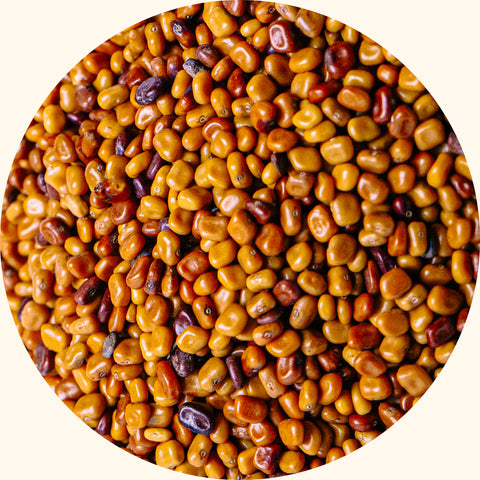
Cover Crop SeedsCalopogonium mucunoides (CM)
Calopogonium mucunoides (CM) is a fast-establishing, short-lived legume cover crop for rubber, coconut and oil palm. It covers the soil 3 to 6 months after sowing (PROSEA 11), fixes nitrogen, and returns nutrients to the soil as its residues break down. Kudzu Seeds Trading supplies CM seed, germination- and purity-tested to ISTA and AOSA methods, to buyers across the Philippines and, on request, worldwide from Davao City; export consignments carry a phytosanitary certificate issued by the Bureau of Plant Industry (BPI).
PLANT CHARACTER
Trailing, short-lived legume (living 1 to 2 years, PROSEA 11) with creeping and twining growth. Establishes quickly, producing dense vegetative cover in the open inter-rows of young rubber, coconut and banana. Adapts well to a range of tropical soil types. Short-lived: it is typically the first species to be shaded out in a legume mixture as the canopy closes.
USES
Nitrogen fixation, erosion control, soil cover, green manure and weed suppression. In a coconut basin study, Calopogonium mucunoides produced 27.21 kg of fresh biomass and 186.5 g of shoot nitrogen per basin, with tops harvested 120 days after sowing 25 g of seed per basin (Thomas and Shantaram 1993, CORD 9(1): 34). This is a study record from one coconut-basin trial on laterite soil in Kerala, India, measured per basin, not a per-hectare or annual figure. See how CM compares to other species in our five-species cover crop comparison.
GROWTH HABIT
Rapid early establishment. PROSEA 11 (Chen Chin Peng and Aminah, 1997) describes CM covering the soil 3 to 6 months after sowing, sooner on newly cleared fertile land, and forming a dense sward at 4 to 5 months. It is the first species to establish in a legume mixture and the first to be shaded out (PROSEA 11, Calopogonium mucunoides entry).
PLANTING TYPE & SEEDING RATE
CM is usually sown in a mixture: calopo, centro and kudzu at 5:4:1, at 2 to 5 kg/ha in the inter-row (PROSEA 4, 1992). The rate for your site, including any pure-stand sowing, is set on the quotation.
PLANTING METHOD
Direct sowing, broadcast or rows
DRY MATTER PRODUCTION
4 to 6 t/ha/year under regular cutting every 9 to 12 weeks (Tropical Forages, CIAT and ILRI 2020)
NO. OF SEEDS/KG
50,000 to 100,000 seeds (Tropical Forages, CIAT and ILRI 2020)
Referenced performance data
Sources named
By the numbers
Each figure below is reported by the source named beneath it and applies to that study's site and management. They are not performance guarantees for our seed.
3 to 6
Months to cover the soil after sowing
Sooner on newly cleared fertile land; a dense sward at 4 to 5 months. CM is the first species to establish in a mixture and the first to be shaded out.
PROSEA 11 (1997), Calopogonium mucunoides entry
4 to 6 t
Dry matter per ha per year
Under regular cutting every 9 to 12 weeks, as listed by Tropical Forages. Yields vary with site and management.
Tropical Forages (CIAT and ILRI 2020), Calopogonium mucunoides
27 kg + 187 g N
Biomass and nitrogen per coconut basin
27.21 kg fresh biomass and 186.5 g shoot nitrogen per basin, tops harvested 120 days after sowing (laterite soil, Kerala, India). A study record from one trial, measured per basin, not a per-hectare or annual figure.
Thomas and Shantaram 1993, CORD 9(1): 34
On fertiliser substitution. You will find published claims that a legume cover can substitute a share of the nitrogen requirement in adult coconut. We do not put a percentage on it, because the contribution varies widely with species, ground cover achieved, soil nitrate and season, and because applied mineral nitrogen suppresses the legume's own fixation. Legume cover contributes nitrogen; adjust your fertiliser programme only after soil and leaf analysis shows what the cover supplies on your block.
SUPPLIERSupplied by Kudzu Seeds Trading, the Philippines-based sister company of Chemiseed Sdn. Bhd. Seed is germination- and purity-tested to ISTA and AOSA methods, and test results are available on request. Export consignments carry a phytosanitary certificate issued by the Bureau of Plant Industry (BPI); import permits and admissibility in the destination country remain the buyer's responsibility.
AVAILABILITYWe supply buyers across the Philippines and, on request, worldwide from Davao City. Request a quotation: minimum order and lead time are confirmed on the quotation.
Related Resources
Buy cover crop seeds in the Philippines
Compare all five cover crop species
Best cover crop for oil palm plantations
Best cover crop for rubber plantations
Quality and certifications
Frequently asked questions
Plan with our free calculators
Estimate the nitrogen this cover crop can contribute with the nitrogen fixation calculator, or model erosion control with the soil erosion calculator. Browse all our plantation tools.
Last reviewed October 2026 by Kudzu Seeds Trading.
Request Quote
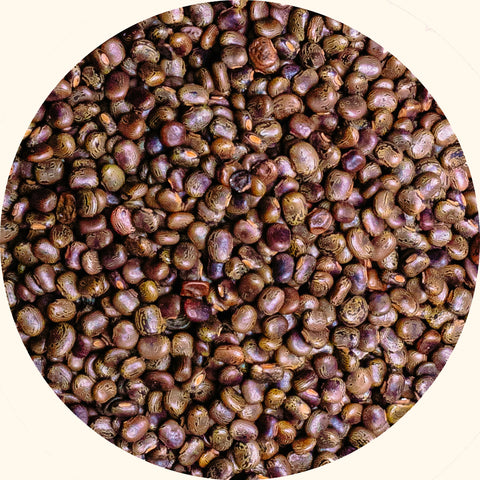
Cover Crop SeedsCentrosema pubescens (CP)
Centrosema pubescens (CP) is a shade-tolerant perennial legume cover crop for plantation inter-rows and agroforestry. In pure stands on good soils it forms a dense ground cover 4 to 8 months after sowing (PROSEA 11; Tropical Forages). Kudzu Seeds Trading supplies CP seed, germination- and purity-tested to ISTA and AOSA methods, to buyers across the Philippines and, on request, worldwide from Davao City; export consignments carry a phytosanitary certificate issued by the Bureau of Plant Industry (BPI).
PLANT CHARACTER
Robust, creeping and twining perennial legume with good shade tolerance and a deep taproot. It persists longer than calopo as plantation canopies close (calopo is the first species shaded out in a mixture, PROSEA 11), though all cover legumes thin under heavy shade.
USES
Nitrogen fixation under shade, erosion control, soil cover in cacao and agroforestry systems, and establishment for replanting and slope protection. Its shade tolerance makes it a standard component of legume mixtures sown under young plantations. See how CP performs against other species in our five-species cover crop comparison.
GROWTH HABIT
Slow to establish. In pure stands on good soils with adequate moisture it forms a dense ground cover 4 to 8 months after sowing (PROSEA 11; Tropical Forages). Once rooted it produces persistent, self-maintaining cover. Suitable for slope gradients where erosion risk is high.
PLANTING TYPE & SEEDING RATE
Pure stand: 3 to 5 kg/ha of scarified seed, broadcast (Tropical Forages, CIAT and ILRI 2020, listed there as Centrosema molle). In mixtures: PJ 4 + CP 3 + CC 1 = 8 kg/ha with 5 g Rhizobium per kg of seed (MPOB TT No. 501, 2012), or calopo, centro and kudzu at 5:4:1 at 2 to 5 kg/ha in the inter-row (PROSEA 4, 1992). The rate for your site is set on the quotation.
PLANTING METHOD
Direct sowing, broadcast or rows
DRY MATTER PRODUCTION
Varies widely with site, shade and management; we do not quote a figure for plantation cover.
NO. OF SEEDS/KG
Stated on the quotation for the seed lot supplied.
Referenced performance data
Sources named
By the numbers
Each figure below is reported by the source named beneath it and applies to the conditions it describes. They are not performance guarantees for our seed.
Not established
Biomass nitrogen
No verified species-specific nitrogen figure is published for CP.
3 to 5 kg/ha
Pure-stand seeding rate, broadcast
Scarified seed. In mixtures, PJ 4 + CP 3 + CC 1 = 8 kg/ha (MPOB TT No. 501). The rate for your site is set on the quotation.
Tropical Forages (CIAT and ILRI 2020), Centrosema molle
4 to 8
Months to dense ground cover
In pure stands on good soils with adequate moisture. CP is slow to establish.
PROSEA 11 (1997), Centrosema pubescens entry
How to read these. The figures above are what the standard reference works report for the conditions they describe; treat them as indicative, not as a specification. No verified species-specific annual nitrogen figure is published for CP under plantation conditions. Legume cover contributes nitrogen; adjust your fertiliser programme only after soil and leaf analysis shows what the cover supplies on your block.
SUPPLIERSupplied by Kudzu Seeds Trading, the Philippines-based sister company of Chemiseed Sdn. Bhd. Seed is germination- and purity-tested to ISTA and AOSA methods, and test results are available on request. Export consignments carry a phytosanitary certificate issued by the Bureau of Plant Industry (BPI); import permits and admissibility in the destination country remain the buyer's responsibility.
AVAILABILITYWe supply buyers across the Philippines and, on request, worldwide from Davao City. Request a quotation: minimum order and lead time are confirmed on the quotation.
Related Resources
Buy cover crop seeds in the Philippines
Compare all five cover crop species
Best cover crop for oil palm plantations
Best cover crop for rubber plantations
Quality and certifications
Frequently asked questions
Plan with our free calculators
Estimate the nitrogen this cover crop can contribute with the nitrogen fixation calculator, or model erosion control with the soil erosion calculator. Browse all our plantation tools.
Last reviewed October 2026 by Kudzu Seeds Trading.
Request Quote
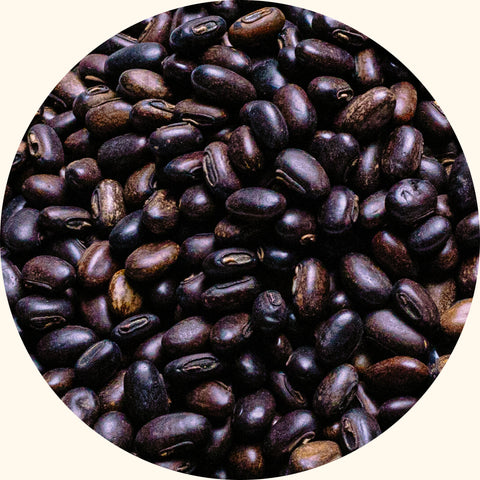
Cover Crop SeedsMucuna bracteata (MB)
Mucuna bracteata (MB) is a vigorous perennial legume cover crop for young oil palm and rubber. It draws 67 to 84% of its nitrogen from the air (15N study under three-year-old oil palm, Malaysia; no routine annual rate is asserted), and in a Malaysian oil palm trial on mineral soil it reached about 100% ground cover 6 months after planting at 680 seedlings/ha (Samedani et al. 2015). Kudzu Seeds Trading supplies MB seed, germination- and purity-tested to ISTA and AOSA methods, to buyers across the Philippines and, on request, worldwide from Davao City; export consignments carry a phytosanitary certificate issued by the Bureau of Plant Industry (BPI).
PLANT CHARACTER
Perennial, creeping, aggressive climber. Thick stems and deep pseudo tap roots. Branches from each node. Adventitious roots do not form easily from nodes touching the ground.
USES
Nitrogen fixation, weed suppression, erosion control, soil moisture and temperature regulation, and soil organic matter improvement. A 15N isotope-dilution study published by the Malaysian Palm Oil Board (MPOB), under three-year-old oil palm on Jawa Series soil (Cheah, Zaharah and Aminuddin 2010, Oil Palm Bulletin 60: 22-27), found that Mucuna bracteata derives 67 to 84% of its nitrogen directly from the atmosphere. That is a share, not a quantity: no routine annual fixation rate is asserted for MB. Legume cover contributes nitrogen; adjust your fertiliser programme only after soil and leaf analysis shows what the cover supplies on your block. Learn how MB compares to other species in our five-species cover crop comparison.
GROWTH HABIT
Shade tolerant during establishment. Growth is slow for the first 2 to 3 months before the cover spreads. Two Malaysian trial records, each with its own conditions: on mineral soil at 680 seedlings/ha (1.5 m spacing), ground cover reached about 100% at 6 months (Samedani et al. 2015, Int. J. Agric. Biol. 17(2): 251-260); on deep peat at Teluk Intan, at 320 seedlings/ha from about 500 seeds (75 g), cover was 31% at 6 months, 58% at 12, 75% at 18 and 78% at 24 months (MPOB TT No. 501, Hasnol Othman, Farawahida Mohamad Darus and Zulkifli Hashim, 2012). How fast the cover closes depends on planting density, soil and rainfall.
WEED CONTROL
In a UPM trial on mineral soil under oil palm, the cover crop treatments together had 97.3 to 99.9% lower weed dry weight and 94.77 to 99.73% lower weed density than unweeded plots, 9 to 24 months after planting (Samedani et al. 2015). A dense legume mat suppresses Imperata cylindrica (lalang/cogon grass) and broadleaf competitors, which can reduce the number of herbicide passes needed.
PLANTING TYPE & SEEDING RATE
MB is raised in a nursery and transplanted. MPOB TT No. 501 (2012): 320 seedlings/ha, two per palm point, raised from about 500 seeds (75 g). Samedani et al. (2015): 680 seedlings/ha on mineral soil. The seed quantity for your planting density is set on the quotation.
PLANTING METHOD
Nursery then field transplanting in points (holes)
DRY MATTER PRODUCTION
No figure is published here for MB; dry matter depends on site, shade and management.
NO. OF SEEDS/KG
Stated on the quotation for each seed lot.
Research-backed performance
Sources named
By the numbers
Each figure below is reported by the source named beneath it and applies to that study's site and management. They are not performance guarantees for our seed.
67 to 84%
Nitrogen from the atmosphere
Measured by 15N isotope dilution under three-year-old oil palm on Jawa Series soil, Malaysia.
Cheah, Zaharah and Aminuddin 2010, Oil Palm Bulletin 60: 22-27
No fixed rate
kg N per hectare per year
No routine annual fixation rate is asserted for MB; the 67 to 84% above is a share of its nitrogen, not a quantity. Confirm the contribution by soil and leaf analysis.
Cheah, Zaharah and Aminuddin 2010, Oil Palm Bulletin 60: 22-27
About 100%
Ground cover at 6 months
Mineral soil, 680 seedlings/ha at 1.5 m spacing, UPM trial under oil palm. On deep peat at 320 seedlings/ha, MPOB TT No. 501 recorded 31% cover at 6 months and 78% at 24 months.
Samedani et al. 2015, Int. J. Agric. Biol. 17(2): 251-260
94.77 to 99.73%
Lower weed density
All cover crop treatments together vs. unweeded plots, 9 to 24 months after planting (UPM trial, mineral soil, oil palm). Weed dry weight was 97.3 to 99.9% lower.
Samedani et al. 2015, Int. J. Agric. Biol. 17(2): 251-260
1.11
g/cm3 bulk density
Surface soil under the Mucuna bracteata cover vs. 1.40 g/cm3 with no cover crop, in a five-year oil palm trial at Oban, Cross River State, Nigeria.
Awelewa et al. 2024, Direct Research Journal of Agriculture and Food Science 12(3): 103-109
Figures above are as reported by the sources named; they describe those studies, not a guaranteed outcome on your site. View MPOB nitrogen fixation bulletin
SUPPLIERSupplied by Kudzu Seeds Trading, the Philippines-based sister company of Chemiseed Sdn. Bhd. Seed is germination- and purity-tested to ISTA and AOSA methods, and test results are available on request. Export consignments carry a phytosanitary certificate issued by the Bureau of Plant Industry (BPI); import permits and admissibility in the destination country remain the buyer's responsibility.
AVAILABILITYWe supply buyers across the Philippines and, on request, worldwide from Davao City. Request a quotation: minimum order and lead time are confirmed on the quotation.
Related Resources
Buy cover crop seeds in the Philippines
Compare All Five Cover Crop Species
Mucuna bracteata vs Pueraria javanica: Head-to-Head Comparison
Best Cover Crop for Oil Palm Plantations
Best Cover Crop for Rubber Plantations
Cover Crops 101: A Guide for Tropical Plantations
Frequently Asked Questions
Plan with our free calculators
Estimate the nitrogen this cover crop can contribute with the Nitrogen Fixation Calculator, or model erosion control with the Soil Erosion Calculator. Browse all our plantation tools.
Last reviewed October 2026 by Kudzu Seeds Trading.
Request Quote
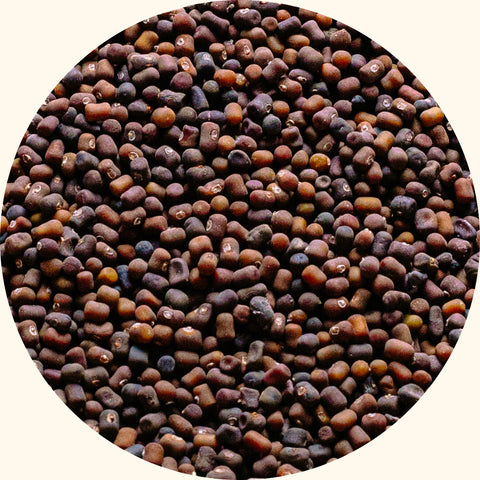
Cover Crop SeedsPueraria javanica (PJ)
Pueraria javanica (PJ), also called tropical kudzu or mani-mani, is a fast-growing tropical legume cover crop for rubber, coconut, oil palm and banana. It can accumulate up to 250 kg N/ha/year in above-ground biomass (one trial under young rubber in northeast Thailand; expect less under a closing canopy or on water-limited ground), forms dense ground cover quickly, and protects soil (in one trial in young replanted rubber in Côte d'Ivoire, a Pueraria cover cut runoff by 88% against bare soil on 1 m2 plots; Perron et al. 2024). Kudzu Seeds Trading supplies PJ seed, germination- and purity-tested to ISTA and AOSA methods, to buyers across the Philippines and, on request, worldwide from Davao City; export consignments carry a phytosanitary certificate issued by the Bureau of Plant Industry (BPI).
PLANT CHARACTER
Fast-growing, trailing to twining annual/short-lived perennial legume. Forms a dense ground cover in the inter-rows of young rubber, coconut, and banana plantings, and thins as the canopy closes. Deep root system contributes to subsoil moisture access and nutrient cycling across tropical plantation conditions.
USES
Nitrogen fixation, erosion control, soil moisture retention, potassium cycling, weed suppression, and cover crop for replanting phases. In one field trial under young rubber in northeast Thailand, Pueraria javanica accumulated up to 250 kg of nitrogen per hectare per year in above-ground biomass, with 85 to 93% of that nitrogen drawn directly from the atmosphere (Clermont-Dauphin et al. 2016, Agriculture, Ecosystems & Environment 217: 79-88); expect less under a closing canopy or on water-limited ground. In young replanted rubber in Côte d'Ivoire, sowing a Pueraria cover in the inter-row reduced runoff by 88% and soil loss by 98% compared with bare soil, on 1 m2 plots monitored for three years, in a trial that also tested spreading logging residues (Perron et al. 2024, Science of the Total Environment 913: 169335). See how PJ compares to other species in our five-species cover crop comparison.
GROWTH HABIT
Vigorous establishment under full sun and moderate shade. PROSEA 11 (1997) describes Pueraria phaseoloides reaching 60 to 70% ground cover about 4 months after sowing and 90 to 100% at about 8 months. In one trial under young rubber in northeast Thailand, above-ground PJ biomass was about 8 t/ha per year (Clermont-Dauphin et al. 2016).
COCONUT & MULTI-CROP USE
Established as a basin legume in coconut, Pueraria phaseoloides produced 28.45 kg of fresh biomass and 196.2 g of shoot nitrogen per basin, with tops harvested 120 days after sowing 25 g of seed per basin (Thomas and Shantaram 1993, CORD 9(1): 34). This is a study record from one coconut-basin trial on laterite soil in Kerala, India, measured per basin, not a per-hectare or annual figure. Well-suited to intercropping systems across tropical plantation regions worldwide.
On fertiliser substitution. You will find published claims that a legume cover can substitute a share of the nitrogen requirement in adult coconut. We do not put a percentage on it, because the contribution varies widely with species, ground cover achieved, soil nitrate and season, and because applied mineral nitrogen suppresses the legume's own fixation. Legume cover contributes nitrogen; adjust your fertiliser programme only after soil and leaf analysis shows what the cover supplies on your block.
PLANTING TYPE & SEEDING RATE
Pure stand: about 4 kg/ha (Tropical Forages, CIAT and ILRI 2020). In mixtures: PJ 4 + CP 3 + CC 1 = 8 kg/ha with 5 g Rhizobium per kg of seed (MPOB TT No. 501, 2012), or calopo, centro and kudzu at 5:4:1 at 2 to 5 kg/ha in the inter-row (PROSEA 4, 1992). The rate for your site is set on the quotation.
PLANTING METHOD
Direct sowing, broadcast or rows
DRY MATTER PRODUCTION
5 to 10 t DM/ha in pure stands (Tropical Forages, CIAT and ILRI 2020); about 8 t/ha per year of above-ground biomass in one trial under young rubber in northeast Thailand (Clermont-Dauphin et al. 2016).
NO. OF SEEDS/KG
60,000 to 90,000 seeds (Tropical Forages, CIAT and ILRI 2020, listed there as Neustanthus phaseoloides)
Research-backed performance
Sources named
By the numbers
Each figure below is reported by the source named beneath it and applies to that study's site and management. They are not performance guarantees for our seed.
Up to 250
kg N per hectare per year in above-ground biomass
Measured in one trial under young rubber in northeast Thailand, 85 to 93% from the air. An upper reference point, not a design value; expect less under a closing canopy or on water-limited ground.
Clermont-Dauphin et al. 2016, Agriculture, Ecosystems & Environment 217: 79-88
About 8 t
Above-ground PJ biomass per ha per year
One trial under young rubber in northeast Thailand. Tropical Forages lists 5 to 10 t dry matter per ha for pure stands.
Clermont-Dauphin et al. 2016, Agriculture, Ecosystems & Environment 217: 79-88
90 to 100%
Ground cover about 8 months after sowing
60 to 70% cover at about 4 months, as described for Pueraria phaseoloides in PROSEA 11 (Auxiliary plants, 1997). Timing varies with site, rainfall and seeding rate.
PROSEA 11 (1997), Pueraria phaseoloides entry
88% / 98%
Less runoff / less soil loss
Pueraria cover vs bare soil in young replanted rubber, Côte d'Ivoire; 1 m2 plots monitored for three years.
Perron et al. 2024, Science of the Total Environment 913: 169335
39 to 46%
Of rubber leaf N from Pueraria
Transfer of fixed nitrogen from Pueraria phaseoloides to rubber trees measured in one trial under young rubber in northeast Thailand (Clermont-Dauphin et al. 2016).
Clermont-Dauphin et al. 2016, Agriculture, Ecosystems & Environment 217: 79-88
Figures above are as reported by the sources named; they describe those studies, not a guaranteed outcome on your site. View the Clermont-Dauphin et al. 2016 study
SUPPLIERSupplied by Kudzu Seeds Trading, the Philippines-based sister company of Chemiseed Sdn. Bhd. Seed is germination- and purity-tested to ISTA and AOSA methods, and test results are available on request. Export consignments carry a phytosanitary certificate issued by the Bureau of Plant Industry (BPI); import permits and admissibility in the destination country remain the buyer's responsibility.
AVAILABILITYWe supply buyers across the Philippines and, on request, worldwide from Davao City. Request a quotation: minimum order and lead time are confirmed on the quotation.
Species Clarification: Not the Invasive US Kudzu
Pueraria javanica (PJ) is a tropical legume cover crop native to Southeast Asia and used for decades in oil palm and rubber plantations across Malaysia, Indonesia, and the Philippines. It is a different species from Pueraria montana var. lobata, the aggressive vine commonly known as "kudzu" in the United States. Like any vigorous cover, PJ is managed in the plantation: keep palm circles and young trees clear of its twining stems.
Read our full species comparison: Is Pueraria javanica the Same as Invasive Kudzu?
Related Resources
Buy cover crop seeds in the Philippines
Compare All Five Cover Crop Species
Pueraria javanica vs Mucuna bracteata: Head-to-Head Comparison
Is Pueraria javanica the Same as Invasive Kudzu?
Best Cover Crop for Oil Palm Plantations
Best Cover Crop for Rubber Plantations
Cover Crops 101: A Guide for Tropical Plantations
Frequently Asked Questions
Plan with our free calculators
Estimate the nitrogen this cover crop can contribute with the Nitrogen Fixation Calculator, or model erosion control with the Soil Erosion Calculator. Browse all our plantation tools.
Last reviewed October 2026 by Kudzu Seeds Trading.
Request Quote


