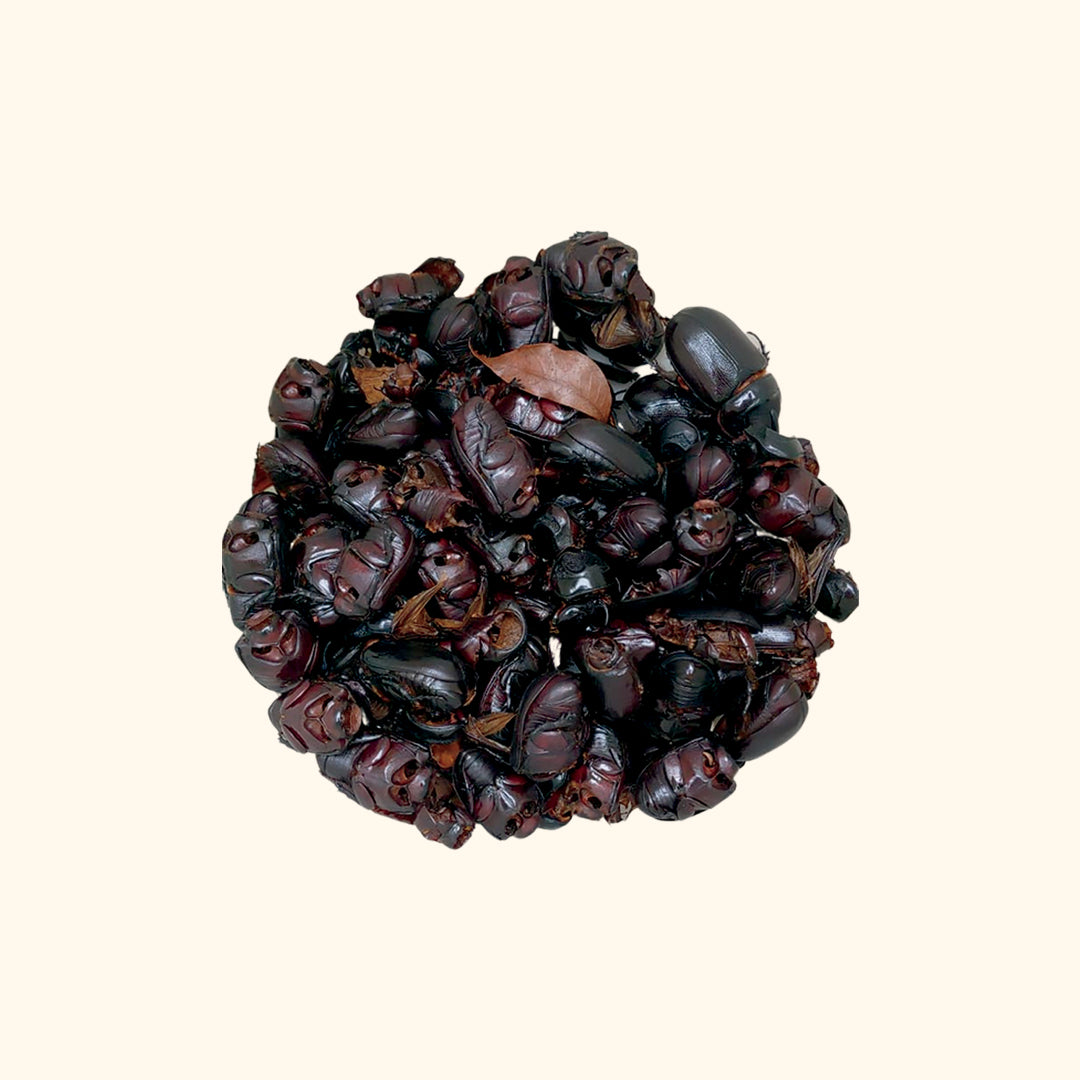
Pheromone-Based Mass-Trapping Support for Rhinoceros Beetles
What is Kudzu RB Lure?
A scientifically formulated, slow-release pheromone designed for the mass trapping of Oryctes rhinoceros (L.) rhinoceros beetles. It is used in coconut and oil palm plantations to support beetle monitoring and mass trapping as part of an integrated pest management (IPM) program, helping reduce beetle damage to young palms and coconut trees. Trapping results vary by pest pressure, trap placement, crop stage, and local conditions. KUDZU RB LURE is easy to handle and supports low-chemical, pheromone-based pest management.
Manufactured for Chemiseed Sdn. Bhd. by ChemTica International, S.A., Costa Rica. For Asia, RB Lure is supplied exclusively by Chemiseed; distributed in the Philippines by Kudzu Seeds Trading, sister company of Chemiseed Sdn. Bhd.
Key Features:
Advanced Formulation:Slow-release pheromone formulated to attract Oryctes rhinoceros.
Targeted Action:Developed to attract rhinoceros beetles, making it a useful tool within Integrated Pest Management (IPM).
Benefits:
Mass-trapping support:Designed to attract and trap rhinoceros beetles, supporting population monitoring and reduction as part of IPM.
Damage reduction:Trapping can help reduce beetle-induced damage to oil palms and coconut trees.
Lower chemical reliance: A pheromone-based measure that can reduce reliance on chemical insecticides within an IPM program.
Optimal Usage:
Trap Density:
Placement: For best coverage, place one (1) pheromone trap per 2 hectares.
Positioning:Hang the traps 2-3 metres above the soil surface along the rows of the palms, where rhinoceros beetles are more likely to encounter the dispersed pheromone.
Kudzu RB Lure Sachet Details:
Composition: Each pheromone sachet contains a formulation of the Oryctes rhinoceros pheromone (ethyl 4-methyloctanoate) in a slow-release matrix, formulated to remain active over an 8-10 week period.
Duration: The slow-release design provides a consistent, gradual emission of the pheromone over the stated period.
Sachets per 2 Hectares
Initial setup: For a 2-hectare area, set up one trap. Up to four (4) sachets per trap may be used in high-pressure areas.
Ongoing maintenance:
Replacement frequency: Replace the sachet every 8-10 weeks, or sooner if the catch rate drops significantly.
Monitoring: Check traps regularly to assess catch rate and sachet condition. High-infestation areas may need closer monitoring and more frequent replacement.
Why Choose Kudzu RB Lure?
Field-used: Used by farmers and plantation managers for rhinoceros beetle monitoring and mass trapping.
Sustainable agriculture: Supports sustainable farming practices by reducing reliance on chemical insecticides.
Contact us at info@kudzuseeds.com for more details.
Global Availability
RB Lure is available for export to tropical regions worldwide where rhinoceros beetle (Oryctes rhinoceros) is present, including Southeast Asia, Latin America, Africa, South Asia, and the Pacific Islands. Contact us for bulk pricing and export documentation.
Pheromone lure effectiveness depends on trap placement, maintenance schedule, field sanitation, and environmental conditions. Lures are species-specific and should be used as part of an integrated pest management program, not as a standalone solution.
What to include in your inquiry
Country and delivery location
Main crop (oil palm, coconut, etc.)
Total area in hectares
Current pest pressure level
Estimated quantity and timeline
Buyer type: plantation, distributor, government, or smallholder
Choosing a selection results in a full page refresh.