News
Practical articles from Kudzu Seeds Trading on legume cover crops, soil health, crop nutrition and pest monitoring for Philippine plantations and farms.
Start here
- The complete guide to tropical cover crop seeds: species, benefits and selection
- Cover crop comparison: Mucuna bracteata vs Pueraria javanica vs Calopogonium mucunoides vs Centrosema pubescens vs Calopogonium caeruleum
- Cover Crop Seeding Rate Guide for the Philippines
- Best cover crop for oil palm: species selection guide by growth stage
- Rhinoceros beetle monitoring with pheromone traps: how RB Lure works in oil palm and coconut
- Cover Crops and Soil Glossary
All articles (page 1 / 3)
-
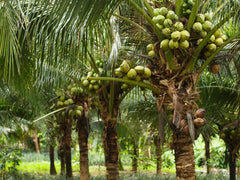
Intercropping Cover Crops in Young Coconut
Sow a legume cover crop across the interrow while your coconut palms are young and the ground is still open to light. In a young coconut planting, the wide spacing...

-
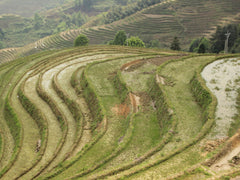
SALT and Sloping-Land Cover Crops in the Uplands
Combine contour hedgerows with a legume cover between them to hold upland soil on a slope. Sloping Agricultural Land Technology, or SALT, is a Philippine upland farming system built on...
-
After the Typhoon: A Soil-Recovery Program
Stabilise the bare soil first, then re-establish a legume cover. After a typhoon strips your canopy and scours the interrows, the immediate risk is erosion on every exposed slope, followed...

-
Pineapple Nutrition for Bukidnon Growers
Pineapple nutrition in Bukidnon turns on potassium, nitrogen, and managing the acid, often manganese-rich upland soils of the plateau.
-
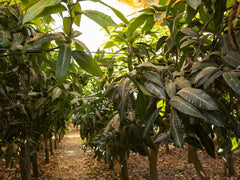
Mango Calcium and Boron in Guimaras and Cebu
Mango fruit quality in Guimaras and Cebu depends heavily on calcium and boron, two nutrients that move slowly in the plant and are easy to run short during fruit set...
-
Calopogonium caeruleum for shaded Philippine plantations
If your interrows sit under a closed canopy and most cover crops thin out and die, Calopogonium caeruleum is the species built for that exact problem. It is a perennial...

-
SoilBoost EA Application Rates and Timing for PH Crops
Apply SoilBoost EA to the root zone, timed to active growth, and confirm the rate against the product label and your crop. SoilBoost EA is a humic acid soil amendment,...
-
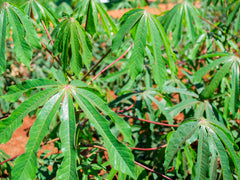
Cassava Soil Conservation with Cover Crops
Cassava soil conservation depends on cover crops and contour hedgerows, because cassava is a wide-spaced, slow-covering crop that leaves soil bare and erosion-prone for months.
-
Legume before rice: lifting Philippine paddy yield
A legume before rice raised the next rice yield by about 15.7 percent on average in a global meta-analysis. How to fit one into a Philippine paddy rotation.

-
Corn-Legume Rotation for Philippine Farms
A corn-legume rotation raises the yield of the following crop and rebuilds soil nitrogen. Here is how Philippine farmers can set one up.

-
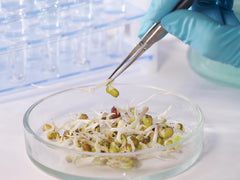
Why your cover-crop seed is slow: hard seed and germination
If you sowed a good cover-crop legume and only part of it came up, the seed was probably not dead: a lot of it was hard. Many tropical legumes carry...
-
Biofertilisers for Philippine smallholders: the honest version
Biofertilisers can support crop growth and soil biology, but they are an addition to good fertility management, not a replacement for it.

-
Cover-Crop Seed Storage and Viability in Humid Conditions
Store cover-crop seed cool, dry, and sealed, because heat and humidity are what kill viability fastest in the Philippines. Legume cover-crop seed loses germination when it takes up moisture from...

-
Seed testing and quality for Philippine buyers: ISTA, AOSA, BPI
When you buy cover-crop or forage seed, the numbers on the label decide what you actually get in the field. A germination percentage, a purity figure, and the testing method...
-
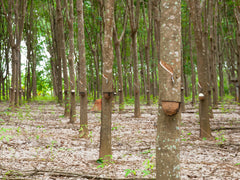
Rubber Soil Management in Zamboanga and Basilan
Rubber soil management in Zamboanga and Basilan turns on protecting the immature interrow with a legume cover crop that fixes nitrogen and moves part of it to the trees.
-
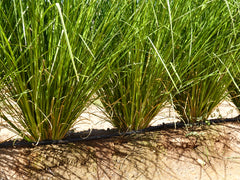
Vetiver hedgerows for typhoon-exposed Philippine slopes
Vetiver grass hedgerows reduce erosion and runoff on steep slopes, which makes them a strong fit for typhoon-exposed Philippine land where heavy rain moves soil fast.
-
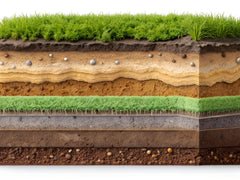
Carbon Project Readiness: A Checklist for PH Estates
Before you commit to a soil-carbon project, get your baseline, your data, and your documentation in order.
-
Sugarcane weevil management in Negros: lures and IPM
Weevils that bore into cane and banana pseudostems (Metamasius and the related banana weevil Cosmopolites) hollow out the plant from inside, where insecticide sprays struggle to reach them.

-
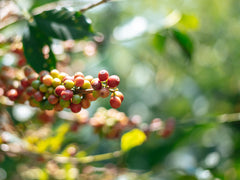
Coffee Shade and Cover Crops in Benguet and Sulu
Coffee in Benguet and Sulu performs best with managed shade above and a legume cover crop below, because the combination steadies temperature and moisture while building soil nitrogen and organic...
-
Cacao black pod in Mindanao: pod-husk compost and shade
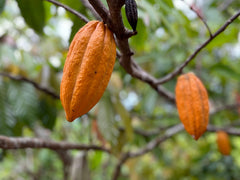
Composting cacao pod husks and managing shade and humidity support cacao against black pod, the Phytophthora disease that costs Mindanao growers pods every wet season.
-
Organic Certification and Cover Crops (PNS and IFOAM)
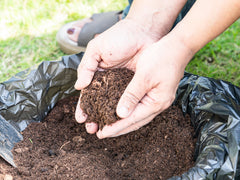
Cover crops fit organic certification as an on-farm source of nitrogen and soil fertility, but they do not by themselves certify a farm. Philippine organic certification runs under the Philippine...
-
Coconut rhinoceros beetle: pheromone lure trapping for PH coconut
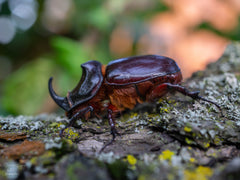
The coconut rhinoceros beetle (Oryctes rhinoceros) bores into the crowns of coconut and oil palms, cutting fronds and opening wounds that can kill young palms and depress yield.
-
Abaca Soil and Cover Crops in Bicol and Catanduanes
Abaca grows best on deep, well-drained, organic-matter-rich soil on protected slopes, which is exactly the soil that a legume cover crop helps build and hold.

-
Durian and Phytophthora in Davao: a soil and drainage approach
Good drainage and healthy soil support durian trees against Phytophthora, the water-loving pathogen behind much of the root, collar, and patch-canker trouble in Davao orchards.