
Cover crop seeds
Cover crop seeds for Philippine plantations Kudzu Seeds Trading supplies Mucuna bracteata (MB), Pueraria javanica (PJ), Calopogonium mucunoides (CM), Centrosema pubescens (CP), and Calopogonium...
5
Products
20+
Countries Served
ISTA
Certified Seeds
Showing 5 products
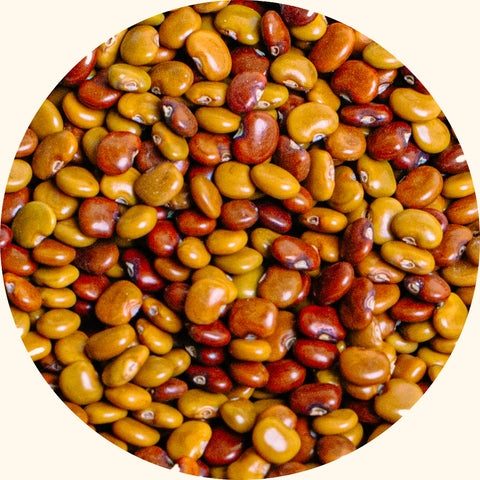
Cover Crop SeedsCalopogonium caeruleum (CC)PLANT CHARACTERPerennial, twining legume, stems become woody with age. Rooting in nodes when in contact with moist soil.
Growth: Spreads via stolons under favorable conditions.
USESGreen manure. Smother weeds and desirable grasses. Nitrogen fixer. Often used as part of a multi-species cover crop mixture in oil palm and rubber plantations.
GROWTH HABITTolerates heavy shade. Grows in soils with pH as low as 4.0. More drought tolerant but slower to establish than CM and PJ. May take 20 months to achieve a complete cover.
SEEDING RATEPure stand: 3-4.5 kg/ha; in a legume mixture: 1-1.5 kg/ha
PLANTING METHODDrill or plants in holes
DRY MATTER PRODUCTION3-7 t/ha/year
NO. OF SEEDS/KG14,500 to 14,700 seeds
SUPPLIERSupplied by Kudzu Seeds Trading, the Philippines-based sister company of Chemiseed Sdn. Bhd. All seeds are tested for germination before shipment and exported with phytosanitary certification (ISPM 7 compliant, Philippine NPPO / Bureau of Plant Industry).
GLOBAL AVAILABILITYAvailable for export to tropical regions worldwide, including Southeast Asia, Latin America, Africa, South Asia, and the Pacific Islands. Contact us for bulk pricing and export documentation.
Related Resources
Compare All Five Cover Crop Species
Best Cover Crop for Oil Palm Plantations
Best Cover Crop for Rubber Plantations
Cover Crops 101: A Guide for Tropical Plantations
Frequently Asked Questions
Plan with our free calculators
Estimate the nitrogen this cover crop can contribute with the Nitrogen Fixation Calculator, or model erosion control with the Soil Erosion Calculator. Browse all our plantation tools.
Request Quote
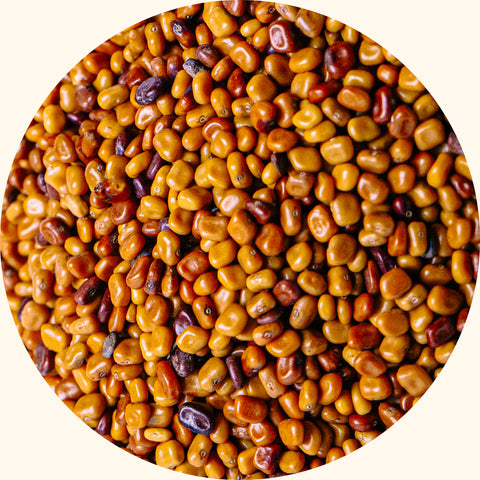
Cover Crop SeedsCalopogonium mucunoides (CM)PLANT CHARACTER
Trailing annual legume with creeping and twining growth. Establishes quickly, producing dense vegetative cover under rubber, coconut, and banana canopies across tropical growing conditions. Adapts well to a range of tropical soil types found throughout tropical regions worldwide.
USES
Nitrogen fixation, erosion control, soil cover, green manure, and weed suppression. Established as a basin legume in coconut systems, Calopogonium mucunoides contributes 27.21 kg of biomass and 186.5 g of nitrogen per basin (Thomas & Shantaram, 1993), and alongside Pueraria javanica, can substitute up to 30% of nitrogen fertiliser requirements in adult coconut. See how CM compares to other species in our five-species cover crop comparison.
GROWTH HABIT
Rapid early establishment under tropical conditions. In Zamboanga Peninsula trials (Department of Agriculture Region 9), Calopogonium mucunoides produced 10,773 kg of fresh biomass per hectare at 150 days after planting. Decomposes at 95.61% within 3 months, one of the fastest nutrient-cycling cover crops for tropical inter-row and basin systems.
PLANTING TYPE & SEEDING RATE
Pure stand: 4-6 kg/ha; in a legume mixture: 1-3 kg/ha
PLANTING METHOD
Direct sowing, broadcast or rows
DRY MATTER PRODUCTION
6-10 t/ha/year
NO. OF SEEDS/KG
~70,000 seeds (1000-seed weight 13-15 g, PROSEA)
Research-backed performance
Peer-reviewed evidence
By the numbers
Research from Philippine DA field trials, peer-reviewed coconut agronomy studies, and tropical plantation research.
10,773
kg fresh biomass at 150 days
Philippines field trial, Zamboanga Peninsula, strong tropical performance under rubber canopy.
Dept. of Agriculture Region 9, Philippines Cover Crop Trial
95.61%
Decomposition within 3 months
Rapid nutrient release back into the root zone under tropical conditions.
Dept. of Agriculture Region 9, Philippines Cover Crop Trial
27 kg + 187 g N
Biomass & nitrogen per coconut basin
27.21 kg biomass and 186.5 g nitrogen per basin, among the highest of any tested legume species.
Thomas & Shantaram 1993, Int. Coconut Community Journal
Up to 30%
N fertiliser substitution in coconut
Reduces nitrogen input costs in coconut plantations, backed by Coconut Board of India research.
Indian Coconut Journal 2022, Coconut Board of India
All statistics from peer-reviewed or institutional sources. View Thomas & Shantaram coconut basin study →
SUPPLIERSupplied by Kudzu Seeds Trading, the Philippines-based sister company of Chemiseed Sdn. Bhd. All seeds are tested for germination before shipment and exported with phytosanitary certification (ISPM 7 compliant, Philippine NPPO / Bureau of Plant Industry).
GLOBAL AVAILABILITYAvailable for export to tropical regions worldwide, including Southeast Asia, Latin America, Africa, South Asia, and the Pacific Islands. Contact us for bulk pricing and export documentation.
Related Resources
Compare All Five Cover Crop Species
Best Cover Crop for Oil Palm Plantations
Best Cover Crop for Rubber Plantations
Cover Crops 101: A Guide for Tropical Plantations
Frequently Asked Questions
Plan with our free calculators
Estimate the nitrogen this cover crop can contribute with the Nitrogen Fixation Calculator, or model erosion control with the Soil Erosion Calculator. Browse all our plantation tools.
Request Quote
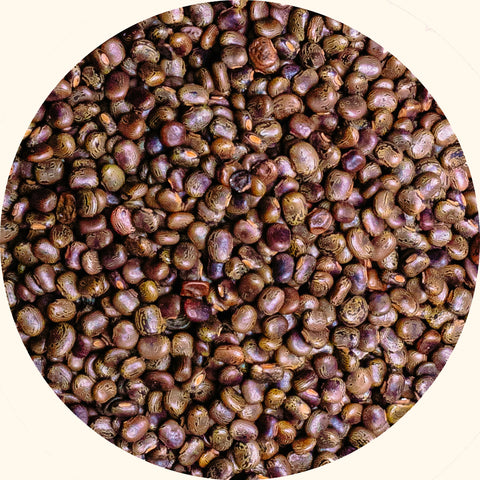
Cover Crop SeedsCentrosema pubescens (CP)PLANT CHARACTER
Robust, creeping perennial legume with good shade tolerance. Produces persistent ground cover even under established plantation canopies. Deep-rooting system contributes to subsoil nutrition and aggregate stability.
USES
Nitrogen fixation under shade, erosion control, soil cover in cacao and agroforestry systems, and establishment for replanting and slope protection. Centrosema pubescens sustains biological nitrogen fixation at 120-270 kg N/ha/year even under canopy shade up to 80%, making it a strong choice where other cover crops struggle beneath closed cacao or rubber canopies. Tissue nitrogen remains stable at 2.4-2.7%, maintaining continuous fertility contribution through leaf turnover. See how CP performs against other species in our five-species cover crop comparison.
GROWTH HABIT
Achieves dense ground cover within 4-8 months under adequate rainfall. Requires good conditions during establishment but produces persistent, self-maintaining cover once rooted. Suitable for slope gradients where erosion risk is high.
PLANTING TYPE & SEEDING RATE
Pure stand: 3-4.5 kg/ha; in a legume mixture: ~2 kg/ha
PLANTING METHOD
Direct sowing, broadcast or rows
DRY MATTER PRODUCTION
5-9 t/ha/year
NO. OF SEEDS/KG
~65,000 seeds
Research-backed performance
Peer-reviewed evidence
By the numbers
Species performance data from agronomic field observation and institutional references across SE Asian plantation systems.
120-270
kg N fixed per hectare per year
Sustained nitrogen fixation even under canopy shade up to 80%, strong performance among tropical legumes.
PROSEA / PlantUse, Centrosema pubescens
Up to 80%
Canopy shade tolerance
Persists under heavy shade, yielding up to 80% of its optimal output, among the most shade-tolerant cover crop species available.
Lucid Pastures, Centro Factsheet
4-8
Months to dense ground cover
Forms a compact cover 35-45 cm deep under adequate rainfall. Requires good conditions during establishment.
Lucid Pastures, Centro Factsheet
2.4-2.7%
Tissue nitrogen content
Stable tissue nitrogen even under shade, continuous fertility contribution through leaf turnover.
PROSEA / PlantUse, Centrosema pubescens
Centrosema pubescens is a strong cover crop option where other species struggle under established canopies. Performance data sourced from institutional and peer-reviewed references.
SUPPLIERSupplied by Kudzu Seeds Trading, the Philippines-based sister company of Chemiseed Sdn. Bhd. All seeds are tested for germination before shipment and exported with phytosanitary certification (ISPM 7 compliant, Philippine NPPO / Bureau of Plant Industry).
GLOBAL AVAILABILITYAvailable for export to tropical regions worldwide, including Southeast Asia, Latin America, Africa, South Asia, and the Pacific Islands. Contact us for bulk pricing and export documentation.
Related Resources
Compare All Five Cover Crop Species
Best Cover Crop for Oil Palm Plantations
Best Cover Crop for Rubber Plantations
Cover Crops 101: A Guide for Tropical Plantations
Frequently Asked Questions
Plan with our free calculators
Estimate the nitrogen this cover crop can contribute with the Nitrogen Fixation Calculator, or model erosion control with the Soil Erosion Calculator. Browse all our plantation tools.
Request Quote
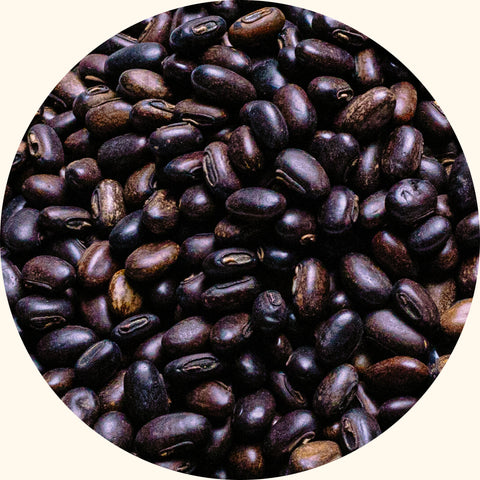
Cover Crop SeedsMucuna bracteata (MB)PLANT CHARACTER
Perennial, creeping, aggressive climber. Thick stems and pseudo tap roots extending 2 to 3m deep. Branches from each node. Adventitious roots do not form easily from nodes touching the ground.
USES
Nitrogen fixation, weed suppression, erosion control, soil moisture and temperature regulation, and soil organic matter improvement. Research conducted by the Malaysian Palm Oil Board (MPOB) confirms that Mucuna bracteata derives 67 to 84% of its nitrogen directly from the atmosphere, delivering 150 to 200 kg of fixed nitrogen per hectare per year under Southeast Asian plantation conditions, a proven reduction in synthetic fertiliser dependency. Learn how MB compares to other species in our five-species cover crop comparison.
GROWTH HABIT
Shade tolerant during establishment. Initial growth is slow during the first 8 to 10 months before becoming highly prolific. Achieves 100% ground cover within 6 months under adequate rainfall, confirmed as the fastest canopy closure of any cover crop tested in Malaysian plantation trials.
WEED CONTROL
The dense legume mat suppresses weed density and dry weight by 94.7 to 99.9% versus unweeded control plots in oil palm inter-rows, effectively eliminating Imperata cylindrica (lalang/cogon grass) and broadleaf competitors, reducing or eliminating herbicide passes.
PLANTING TYPE & SEEDING RATE
Monoculture: 85 to 100 g/ha
PLANTING METHOD
Nursery then field transplanting in points (holes)
DRY MATTER PRODUCTION
Up to 28 t/ha/year (open canopy); about 13 t/ha/year under 60 to 70 percent shade (MPOB)
NO. OF SEEDS/KG
5,900 to 6,000 seeds
Research-backed performance
Peer-reviewed evidence
By the numbers
Data from MPOB, JCU, and peer-reviewed plantation trials across Malaysia, Indonesia, and Nigeria.
67 to 84%
Nitrogen from the atmosphere
Confirmed by 15N isotope dilution tracing in a 3-year oil palm plantation, Malaysia.
MPOB / Cheah et al., Oil Palm Bulletin No. 60
150 to 200
kg N fixed per hectare per year
Routine fixation rate when established at 100% ground cover under Southeast Asian plantation conditions.
JCU / Pipai 2023, Biological N Fixation in Oil Palm
6
Months to 100% ground cover
Fastest canopy closure of any cover crop tested under Malaysian and Indonesian plantation conditions.
CABI / JOPR 2025, Cover Crops in Malaysian Oil Palm
84%
Higher oil yield vs. bare soil
5-year field trial in Southern Nigeria: 1.69 t/ha (Mucuna) vs 0.92 t/ha (control) by year 5.
Direct Research Journal of Agric. & Food Science 2022
94.7 to 99.9%
Reduction in weed density
Weed density and dry weight reduction vs. unweeded control plots in oil palm inter-rows.
CABI Digital Library, Cover Crops & Weed Suppression in Oil Palm
1.11
g/cm3 bulk density
Under Mucuna bracteata vs. 1.40 g/cm3 in bare-soil controls. Improved soil porosity and root penetration.
Direct Research Journal of Agric. & Food Science 2022
All statistics are drawn from peer-reviewed or institutional research. View MPOB nitrogen fixation bulletin
SUPPLIERSupplied by Kudzu Seeds Trading, the Philippines-based sister company of Chemiseed Sdn. Bhd. All seeds are tested for germination before shipment and exported with phytosanitary certification (ISPM 7 compliant, Philippine NPPO / Bureau of Plant Industry).
GLOBAL AVAILABILITYAvailable for export to tropical regions worldwide, including Southeast Asia, Latin America, Africa, South Asia, and the Pacific Islands. Contact us for bulk pricing and export documentation.
Related Resources
Compare All Five Cover Crop Species
Mucuna bracteata vs Pueraria javanica: Head-to-Head Comparison
Best Cover Crop for Oil Palm Plantations
Best Cover Crop for Rubber Plantations
Cover Crops 101: A Guide for Tropical Plantations
Frequently Asked Questions
Plan with our free calculators
Estimate the nitrogen this cover crop can contribute with the Nitrogen Fixation Calculator, or model erosion control with the Soil Erosion Calculator. Browse all our plantation tools.
Request Quote
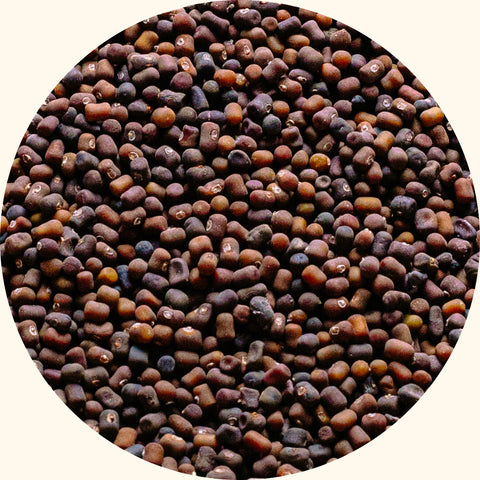
Cover Crop SeedsPueraria javanica (PJ)PLANT CHARACTER
Fast-growing, trailing to twining annual/short-lived perennial legume. Forms a dense, self-regenerating ground cover under rubber, coconut, and banana plantation canopies. Deep root system contributes to subsoil moisture access and nutrient cycling across tropical plantation conditions.
USES
Nitrogen fixation, erosion control, soil moisture retention, potassium cycling, weed suppression, and cover crop for replanting phases. Field research confirms Pueraria javanica can fix up to 250 kg of nitrogen per hectare per year, with 85-93% of that nitrogen drawn directly from the atmosphere at full ground cover. In replanted rubber, a legume cover including Pueraria reduced runoff by 88% and soil loss by 98% versus bare soil (Perron et al., 2024). See how PJ compares to other species in our five-species cover crop comparison.
GROWTH HABIT
Vigorous establishment under full sun and moderate shade. In Zamboanga Peninsula trials (Department of Agriculture Region 9), Pueraria javanica produced 14,347 kg of fresh biomass per hectare at 150 days after planting. Biomass decomposes at 95.66% within 3 months, releasing 3.572% N, 0.245% P, and 0.809% K directly back into the root zone.
COCONUT & MULTI-CROP USE
Established as a basin legume in coconut, Pueraria javanica contributes 28.45 kg of biomass and 196.2 g of nitrogen per basin, and can substitute up to 30% of nitrogen fertiliser requirements (Indian Coconut Journal, 2022). Well-suited to intercropping systems across tropical plantation regions worldwide.
PLANTING TYPE & SEEDING RATE
Pure stand: 4-6 kg/ha; in a legume mixture: 2-4 kg/ha
PLANTING METHOD
Direct sowing, broadcast or rows
DRY MATTER PRODUCTION
8-12 t/ha/year
NO. OF SEEDS/KG
~55,000 seeds
Research-backed performance
Peer-reviewed evidence
By the numbers
Research data from Philippine DA trials, Southeast Asian plantation studies, peer-reviewed erosion research, and tropical agronomy literature.
~250
kg N fixed per hectare per year
Upper-range biological nitrogen fixation at full ground cover, immature rubber, Southeast Asia.
Vrignon-Brenas et al. 2019, Agronomy for Sustainable Development
14,347
kg fresh biomass at 150 days
Zamboanga Peninsula, Philippines field trial, the highest biomass of any tested cover crop.
Dept. of Agriculture Region 9, Philippines Cover Crop Trial
95.66%
Decomposition in 3 months
Releasing 3.572% N, 0.245% P, and 0.809% K per tissue weight back into the root zone.
Dept. of Agriculture Region 9, Philippines Cover Crop Trial
88% / 98%
Less runoff / less soil loss
Peer-reviewed 2024 study on replanted rubber, dramatic erosion control from the first season.
Perron et al. 2024, Science of the Total Environment
Up to 30%
N fertiliser substitution in coconut
Established in coconut basins alongside Calopogonium mucunoides, reduces nitrogen fertiliser dependency.
Indian Coconut Journal 2022, Coconut Board of India
39-46%
Of rubber leaf N from Pueraria
Transfer of fixed nitrogen from Pueraria phaseoloides to rubber trees measured in plantation trials.
ResearchGate / Clermont-Dauphin, Pueraria-Hevea N Transfer Study
All statistics from peer-reviewed or institutional research sources. View Philippines DA Region 9 cover crop trial →
SUPPLIERSupplied by Kudzu Seeds Trading, the Philippines-based sister company of Chemiseed Sdn. Bhd. All seeds are tested for germination before shipment and exported with phytosanitary certification (ISPM 7 compliant, Philippine NPPO / Bureau of Plant Industry).
GLOBAL AVAILABILITYAvailable for export to tropical regions worldwide, including Southeast Asia, Latin America, Africa, South Asia, and the Pacific Islands. Contact us for bulk pricing and export documentation.
Species Clarification: Not Invasive Kudzu
Pueraria javanica (PJ) is a non-invasive tropical legume native to Southeast Asia. It is taxonomically distinct from Pueraria montana var. lobata, the aggressive vine commonly known as "kudzu" in the United States. PJ grows as a controlled ground cover, does not climb aggressively into tree canopies, and has been safely used in oil palm and rubber plantations across Malaysia, Indonesia, and the Philippines for decades.
Read our full species comparison: Is Pueraria javanica the Same as Invasive Kudzu?
Related Resources
Compare All Five Cover Crop Species
Pueraria javanica vs Mucuna bracteata: Head-to-Head Comparison
Is Pueraria javanica the Same as Invasive Kudzu?
Best Cover Crop for Oil Palm Plantations
Best Cover Crop for Rubber Plantations
Cover Crops 101: A Guide for Tropical Plantations
Frequently Asked Questions
Plan with our free calculators
Estimate the nitrogen this cover crop can contribute with the Nitrogen Fixation Calculator, or model erosion control with the Soil Erosion Calculator. Browse all our plantation tools.
Request Quote