Buy Cover Crop Seeds in the Philippines: Pueraria javanica and More
Kudzu Seeds Trading supplies scarified, germination-tested tropical cover crop seed for coconut, oil palm, rubber, and fruit plantations. Request a quote for trial packs or bulk estate orders. Species, lot availability, price, minimum order, and lead time are confirmed at quotation.
Note on our name: The "kudzu" seed most growers want in the tropics is Pueraria javanica (tropical kudzu, mani-mani), a managed cover crop legume. It is not Pueraria montana, the invasive kudzu vine regulated in parts of the USA. Our seed is germination- and purity-tested to ISTA and AOSA methods. See the difference.
Kudzu Seeds Trading is a Philippine supplier of legume cover crop seed, soil conditioner and rhinoceros beetle lures to plantations since 2002, and the Philippines-based sister company of Chemiseed Sdn. Bhd. We supply buyers across the Philippines and, on request, worldwide from Davao City. Our buyers include plantation managers, cooperatives, and agri-input dealers. Pricing is by quote, so you get a rate matched to your species, quantity, and delivery.
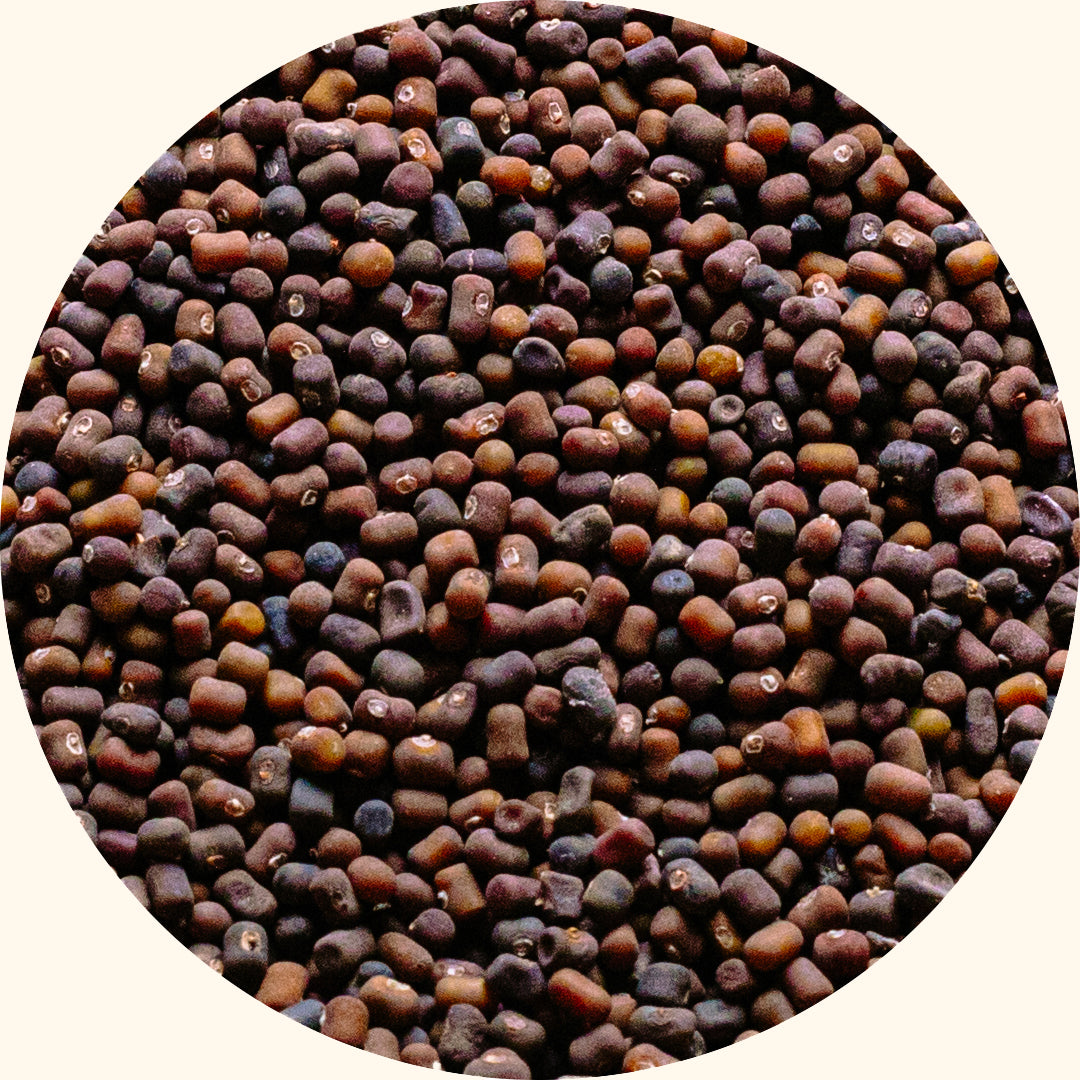
Pueraria javanica (PJ) cover crop seed, scarified and germination-tested.
Seeding rates and planting method: our recommended rates are each for one species sown alone: 10 kg per hectare for PJ, CM and CP, 5 kg per hectare for CC and 1 kg per hectare for Mucuna bracteata. For a mixture, the quantity of each species is set on the quotation for your site. Recommended planting method for all five species: drill or in holes. Broadcasting does not guarantee good germination, especially where the soil dries out easily. MB can also be raised in a nursery and transplanted (MPOB TT No. 501 raised about 320 MB seedlings per hectare from about 500 seeds, 75 g, on deep peat). Ask us for the establishment method alongside the seed.
Why buy from Kudzu Seeds Trading
Scarified and germination-tested. Seed lots are germination- and purity-tested to ISTA and AOSA methods before despatch. The test report and lot details for your order are confirmed at quotation.
Shipped from Davao City. We supply buyers across the Philippines and, on request, worldwide from Davao City. Export shipments carry a phytosanitary certificate issued by the Bureau of Plant Industry (BPI). Requirements vary by destination country and are confirmed at quotation. The certificate attests to inspection at origin and does not by itself authorise import, so import permits and admissibility remain the responsibility of the buyer.
Agronomist support. We advise on the right species, seeding rate, and mixture for your crop, soil, and terrain.
Trial packs to estate volumes. From small trial packs to full estate and cooperative quantities, subject to lot availability at the time of quotation. Minimum order and lead time are confirmed on the quotation.
On nitrogen and fertiliser planning
Legume cover crops build soil nitrogen and organic matter over time, but the contribution depends on establishment, species, canopy, and rainfall. Figures on this page are site-dependent and are not design values. The Pueraria javanica (Pueraria phaseoloides) figure of up to 250 kg N/ha/yr at 85 to 93 percent Ndfa is a measured upper reference point from one field trial, in a well-established stand under rubber, reported by Clermont-Dauphin, C., Suvannang, N., Pongwichian, P., Cheylan, V., Hammecker, C. and Harmand, J.-M. (2016), “Dinitrogen fixation by the legume cover crop Pueraria phaseoloides and transfer of fixed N to Hevea brasiliensis: Impact on tree growth and vulnerability to drought”, Agriculture, Ecosystems & Environment 217: 79-88 (doi.org/10.1016/j.agee.2015.11.002). Published figures vary widely with site, stand age, and management, and a thin or young stand fixes far less. The same study also found the cover reduced young rubber’s resilience to drought on the water-limited part of the slope, which is worth planning for on drought-prone sites. Legume cover contributes nitrogen; adjust your fertiliser programme only after soil and leaf analysis shows what the cover supplies on your block.
How to order
All orders are by quotation. Tell us your crop, hectarage, and location, and we will recommend species and quantities and send a quotation. Price, availability, minimum order, and lead time are confirmed on the quotation. We reply within one business day (Philippine time).
No. We supply Pueraria javanica and other managed tropical cover crop legumes for plantations. This is not Pueraria montana, the invasive kudzu vine regulated in parts of the USA. In plantations, Pueraria javanica is managed as a ground cover.
What does it cost?
Pricing is by quote and depends on species, quantity, and delivery. We do not publish prices, because rates move with lot, volume, and freight. Request a quote for a rate matched to your order, confirmed at quotation.
Can I get a small trial quantity?
Usually yes. We supply small trial packs as well as bulk estate volumes, subject to lot availability at the time of enquiry. Request a sample or a quote. Minimum order and lead time are confirmed on the quotation.
Do you deliver nationwide and export?
Yes. We supply buyers across the Philippines and, on request, worldwide from Davao City. Export shipments carry a phytosanitary certificate issued by the Bureau of Plant Industry (BPI). Delivery timing and destination requirements vary and are confirmed at quotation, and any import permit remains the responsibility of the buyer. Contact us for logistics.
How much seed do I need per hectare?
Recommended seeding rates, each for one species sown alone (our recommendation): Pueraria javanica, Calopogonium mucunoides and Centrosema pubescens 10 kg per hectare; Calopogonium caeruleum 5 kg per hectare; Mucuna bracteata 1 kg per hectare. Recommended planting method for all five species: drill or in holes, because broadcasting does not guarantee good germination, especially where the soil dries out easily. For a mixture, the quantity of each species is set on the quotation for your site. For the record, MPOB's peat trial (MPOB TT No. 501, Table 1 treatment C2) used PJ 4 + CP 3 + CC 1 = 8 kg per hectare, which MPOB calls conventional LCC, with 5 g of Rhizobium (RRI strain) inoculant per kg of seed. Mucuna bracteata can also be raised in a nursery and transplanted: MPOB TT No. 501 used about 320 seedlings per hectare on deep peat, two per palm point, from about 500 seeds (75 g). MB is not broadcast. See our seeding rate guide to work out the quantity for your area.