
Home page
Premium tropical agriculture products and solutions, quality-tested, field-proven, and sourced for the plantation industry.
2
Products
20+
Countries Served
B2B
Trade Supply
Showing 2 products
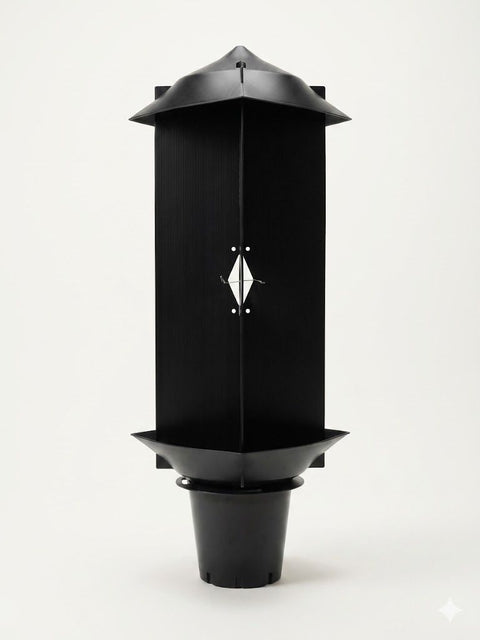
Pest ManagementKudzu RB Lure
Pheromone-Based Mass-Trapping Support for Rhinoceros Beetles
What is Kudzu RB Lure?
A slow-release aggregation pheromone lure for monitoring and mass trapping of Oryctes rhinoceros (L.) rhinoceros beetles. It is used in coconut and oil palm plantations to support beetle monitoring and mass trapping as part of an integrated pest management (IPM) program, helping reduce beetle damage to young palms and coconut trees. Trapping results vary by pest pressure, trap placement, crop stage, and local conditions. KUDZU RB LURE is easy to handle and supports low-chemical, pheromone-based pest management. It is a monitoring and mass-trapping tool, not a pesticide.Manufactured for Chemiseed Sdn. Bhd. by ChemTica International, S.A. (Costa Rica); supplied in the Philippines by Kudzu Seeds Trading.
Key Features:
Advanced Formulation: Slow-release pheromone formulated to attract Oryctes rhinoceros.
Targeted Action: Developed to attract rhinoceros beetles, making it a useful tool within Integrated Pest Management (IPM).
Benefits:
Mass-trapping support: Designed to attract and trap rhinoceros beetles, supporting population monitoring and reduction as part of IPM.
Damage reduction: Trapping can help reduce beetle-induced damage to oil palms and coconut trees.
Lower chemical reliance: A pheromone-based measure that can reduce reliance on chemical insecticides within an IPM program.
Optimal Usage:
Trap Density:
Placement: Place one (1) pheromone trap per 2 hectares.
Positioning: Hang the traps 2 to 3 metres above the soil surface along the rows of the palms, where rhinoceros beetles are more likely to encounter the dispersed pheromone.
Kudzu RB Lure Sachet Details:
Composition: Each pheromone sachet contains a formulation of the Oryctes rhinoceros pheromone (ethyl 4-methyloctanoate) in a slow-release matrix, formulated to remain active over an 8 to 10 week period (manufacturer specification).
Duration: The slow-release design provides a consistent, gradual emission of the pheromone over the stated period.
Sachets per Trap
Initial setup: One trap per 2 hectares, as above. Up to four (4) sachets per trap may be used in high-pressure areas.
Ongoing maintenance:
Replacement frequency: Replace the sachet every 8 to 10 weeks, or sooner if the catch rate drops significantly.
Monitoring: Check traps regularly to assess catch rate and sachet condition. High-infestation areas may need closer monitoring and more frequent replacement.
Why Choose Kudzu RB Lure?
Established method: aggregation pheromones are used commercially for trapping Oryctes rhinoceros in Southeast Asian oil palm plantations (Bedford, 2013, Annual Review of Entomology 58: 353-372).
Sustainable agriculture: Supports sustainable farming practices and can reduce reliance on chemical insecticides within an IPM program.
Availability
Kudzu RB Lure is supplied to buyers in the Philippines from Davao City. Request a quotation: minimum order and lead time are confirmed on the quotation. You can also email info@kudzuseeds.com.
Related Resources
Buy rhinoceros beetle traps (Kudzu RB Lure)
Complete Guide to Rhinoceros Beetle Pheromone Trapping
Cover Crops for Cogon-Prone Fields
Frequently Asked Questions
Request Quote
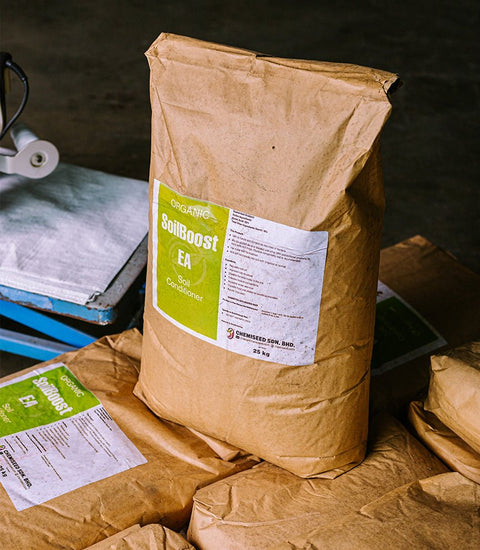
Soil SolutionsSoilBoost EAWHAT IS SOILBOOST EA?
SoilBoost EA is a concentrated humic acid soil conditioner manufactured exclusively for Chemiseed Sdn. Bhd. and Kudzu Seeds Trading, formulated for tropical plantation crops. Derived from 100% Leonardite ore, it supplies humic and fulvic fractions to the root zone and is used to support nutrient retention, soil structure and biological activity across oil palm, rubber, cacao, durian, and associated crops.
SOURCE AND KEY INGREDIENTS
SoilBoost EA is produced from 100% Leonardite ore, a concentrated natural source of humic substances. Composition: Leonardite-derived humic acid, an active fulvic fraction, approximately 0.45% sulphur, pH 3.84, plus chelated micronutrients (iron, zinc, copper). Humic acid can raise the soil's cation exchange capacity and support soil structure, while the more mobile fulvic fraction carries micronutrients to the plant. Learn how Leonardite humic acid works.
WHAT THE RESEARCH ON HUMIC ACID AS A CLASS SHOWS
A 2024 meta-analysis of 120 articles and 479 paired observations (Ma, Cheng and Zhang, 2024, Agronomy 14(12): 2763) reported that humic acid amendment increased crop yield by 12%, nitrogen use efficiency by 27% and nitrogen uptake by 17% on average. It tested humic acid products as a class: SoilBoost EA was not among the products tested. An earlier meta-analysis of 81 studies with more than 700 observations (Rose et al., 2014, Advances in Agronomy 124: 37-89) found average shoot dry weight increases of about 22% and root dry weight increases of about 21%, with larger shoot responses under highly stressful conditions (about 28%, against 18% without stress). The same authors report that about half of the shoot studies and a third of the root studies showed gains of 5% or less. These figures describe humic substances in general; they are not a promised result for SoilBoost EA on your site.
HOW IT WORKS
The humic acid literature describes four main mechanisms:
Nutrient chelation, forms stable, water-soluble complexes with iron, zinc, copper, and other micronutrients, keeping them bioavailable rather than precipitated
CEC enhancement, can increase the soil's cation exchange capacity, which helps the soil hold potassium, calcium, magnesium, and ammonium during heavy rainfall
Gene upregulation, low-molecular-weight humic acid has been reported to up-regulate root nitrate-uptake genes (NRT2.1 and MHA2), as summarised in the 2024 meta-analysis above
Organo-mineral complexation, may help protect labile soil carbon from rapid decomposition
OPTIMAL CONDITIONS
In the 2024 meta-analysis above, responses were strongest where annual rainfall was above 300 mm and in soils with a moderate pH (6 to 8) or low total nitrogen. Check your own soil test before you plan the rate.
APPLICATION
Soil drench, fertigation, or foliar application depending on crop stage and target outcome. It can be used alongside established leguminous cover crops. The rate for your site is confirmed on the quotation.
Research-backed performance
MANUFACTURED EXCLUSIVELY FOR CHEMISEED AND KUDZU SEEDS TRADINGSoilBoost EA is manufactured exclusively for Chemiseed Sdn. Bhd. and Kudzu Seeds Trading. Kudzu Seeds Trading, the Philippines-based sister company of Chemiseed Sdn. Bhd., supplies SoilBoost EA to buyers in the Philippines.
AVAILABILITYWe supply buyers across the Philippines and, on request, worldwide from Davao City. Where the importing country requires one, export shipments carry a phytosanitary certificate issued by the Bureau of Plant Industry (BPI). Request a quotation: minimum order and lead time are confirmed on the quotation.
Peer-reviewed evidence
By the numbers
Average effects from two published meta-analyses of humic substances (Ma et al. 2024: 120 articles; Rose et al. 2014: 81 studies). They are not results for SoilBoost EA itself.
+12%
Average crop yield increase
Meta-analytic average across crops and environments; strongest at moderate soil pH or low soil nitrogen.
Ma, Cheng and Zhang 2024, Agronomy 14(12): 2763
+27%
Nitrogen use efficiency
Average improvement in how much applied nitrogen the crop takes up, across the studies in the meta-analysis.
Ma, Cheng and Zhang 2024, Agronomy 14(12): 2763
+17%
Total nitrogen uptake
Average increase in crop nitrogen uptake across the studies in the meta-analysis.
Ma, Cheng and Zhang 2024, Agronomy 14(12): 2763
~22%
Shoot dry weight increase
Meta-analysis of 81 studies with more than 700 observations; about half of the shoot studies showed gains of 5% or less.
Rose et al. 2014, Advances in Agronomy 124: 37-89
~21%
Root dry weight increase
Average root dry weight response in the same meta-analysis; about a third of the root studies showed gains of 5% or less.
Rose et al. 2014, Advances in Agronomy 124: 37-89
In the 2024 meta-analysis, responses were strongest where annual rainfall was above 300 mm and in soils with a moderate pH (6 to 8) or low total nitrogen. View the Ma et al. 2024 meta-analysis
Field trial: FPA EUP 3227
FPA REGISTRATION TRIAL (PHILIPPINES)
SoilBoost EA was evaluated in a company-commissioned bioefficacy trial at the PCA-Davao Research Center, conducted for Philippine product registration under the Fertilizer and Pesticide Authority (FPA Experimental Use Permit No. 3227) and registered to Kudzu Seeds Trading. The randomized complete block trial (6 treatments, 3 replications) was run by an FPA-accredited researcher on tissue-cultured Lacatan banana seedlings, and was certified as following Good Agricultural Practices. The terminal report is unpublished and covers banana seedlings only.
What the trial found (3 months after application, all differences statistically significant at p < 0.01):
SoilBoost EA used on its own produced taller seedlings with greater girth and more leaves than the unfertilized control.
The strongest growth came from combining a balanced fertilizer program with SoilBoost EA, consistent with its role as a soil conditioner that helps fertilizer work harder, not a fertilizer replacement.
SoilBoost EA raised soil organic matter, available phosphorus and potassium, lifted soil pH, and improved the soil's water-holding capacity (88.7% versus 80.0% in the untreated control), with soil drying out more slowly.
A summary of this FPA trial is available on request. See the Evidence Hub for the full data tables, or contact our technical team.
Related Resources
Leonardite Humic Acid: Source, Composition, and How It Works
SoilBoost EA for Durian and Tropical Fruit Trees
How to Pair SoilBoost EA with Cover Crops for Maximum Soil Health
Browse All Cover Crop Seeds
Frequently Asked Questions
Plan with our free calculators
Estimate how much SoilBoost EA to apply by crop, area, and method with the SoilBoost EA Application Rate Calculator. Browse all our plantation tools.
SoilBoost EA is a soil conditioner. It is not a fertiliser and not a substitute for one. It is not a fungicide, pesticide, plant protection product, or standalone treatment for Fusarium TR4, Phytophthora, or any crop disease. It may support soil structure and root-zone conditions as part of a broader agronomy program, but disease management must follow local agronomist, regulatory, sanitation, drainage, and resistant-variety guidance.
Request Quote
-
 Sold outSold out
 -
 Sold outSold out

